


Figure 2
Download original image
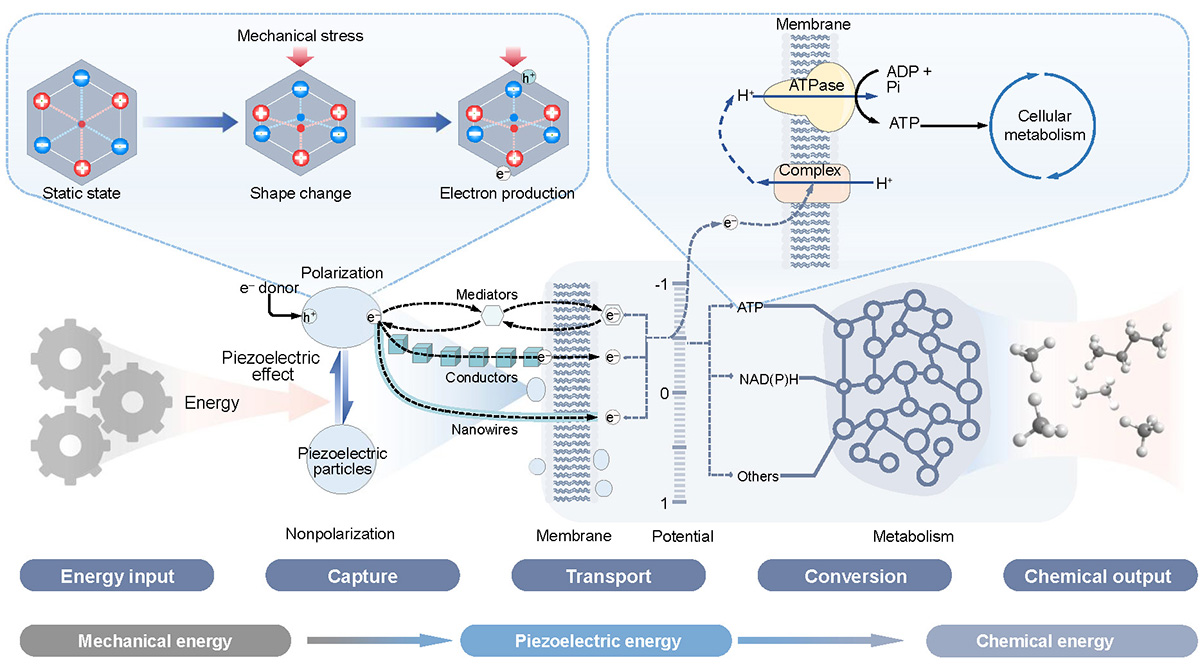
Hypothetical energy flow in piezoelectrotrophy. This schematic depicts the proposed transduction pathway for piezoelectrotrophy, converting mechanical energy (left input) to bioavailable chemical energy (right output) via nano-bio interface processes. Mechanical stress induces shape changes in piezoelectric materials, causing charge separation and the generation of electrons (e−) and protons (H+) through the piezoelectric effect. Captured charges transfer across the microbial membrane via conductive nanowires, outer membrane cytochromes, or soluble mediators, establishing a membrane potential and proton gradient. The membrane potential and proton gradient drive ATP synthesis by ATP synthase or the reduction of electron carriers like NAD(P)H, integrating with cellular metabolism for growth and maintenance. The mechanism distinguishes piezoelectrotrophy from established paradigms by utilizing ubiquitous mechanical forces in energy-limited environments.
Current usage metrics show cumulative count of Article Views (full-text article views including HTML views, PDF and ePub downloads, according to the available data) and Abstracts Views on Vision4Press platform.
Data correspond to usage on the plateform after 2015. The current usage metrics is available 48-96 hours after online publication and is updated daily on week days.
Initial download of the metrics may take a while.