


| Issue |
Natl Sci Open
Volume 5, Number 3, 2026
|
|
|---|---|---|
| Article Number | 20260008 | |
| Number of page(s) | 3 | |
| Section | Materials Science | |
| DOI | https://doi.org/10.1360/nso/20260008 | |
| Published online | 31 January 2026 | |
COMMENTARY
Thermal runaway prevented by instantaneous polymerization
College of Materials Science and Engineering, Hunan Joint International Laboratory of Advanced Materials and Technology for Clean Energy, Hunan Province Key Laboratory for Advanced Carbon Materials and Applied Technology, Hunan University, Changsha 410082, China
* Corresponding author (email: This email address is being protected from spambots. You need JavaScript enabled to view it.
)
Received:
14
January
2026
Accepted:
29
January
2026
Thermal runaway of lithium metal battery arising from elevated temperature remains a major challenge for their application in energy storage systems [1,2]. Separator melting upon thermal abuse conditions is considered as a common cause of short circuits, which further leads to thermal runaway [2–4]. In a recent study published in Nature Energy, You and coworkers [5] demonstrate a thermal-responsive electrolyte being able to solidify within 5 s once the temperature reaches the melting point of the separator (Tm=140 °C). While various types of thermal-responsive electrolytes have been reported to address short circuits utilizing thermal-induced polymerization of electrolyte [6–8], few have demonstrated the potential to respond in such a fast manner (Figure 1a).
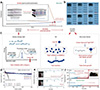 |
Figure 1 (a) Schematic illustration showing the design of an ultrafast thermal responsive electrolyte to prevent thermal runaway in lithium metal battery. (b) Images showing the solidification of TDT electrolyte by polymerization occurs within seconds at 140 °C. (c) Schematic illustration showing the determining factors of polymerization kinetics. (d) Cycling stability of LFP||Li cells with TDT and EDV electrolytes under different temperatures at 0.3 C. (e) Voltage-time curves of LFP||Li cells with TDT and EDV electrolytes at temperature below and above the melting point of separator. (f) Temperature-time curves of LFP||Li pouch cells with TDT and EDV electrolytes of accelerating rate calorimeter tests. TDT electrolyte shows no obvious heat release during the test, while the temperature of EDV electrolyte exceeds 1000 °C. Adapted with permission from Ref. [5]. |
The as-designed electrolyte (TDT electrolyte) is prepared with a composition of lithium bis(trifluoromethane) sulfonimide, LiNO3 and LiPF6 (2:0.5:0.01, M/M) in a mixture of triethyleneglycol divinyl ether (TEGDVE), 1,2-difluorobenzene and triglyme (3:2:5, v/v). TDT electrolyte remains as a liquid below Tm, providing sufficient ionic conductivity and compatibility for the battery to operate at normal conditions. Ultrafast liquid-to-solid transition of electrolyte occurs once the temperature reaches Tm (Figure 1b), therefore preventing heat accumulation generated by short circuits. Instantaneous phase transition is enabled by polymerization with both fast initiation and chain growth. As the rate-determining step, rapid initiation is ensured by low activation energy, which is achieved by cationic polymerization using Lewis acid (LiPF6) as initiator. High degree of functionality (DOF) and low steric hindrance (SH) of monomer (TEGDVE) synergistically promote fast chain growth, further contributing to the rapid polymerization kinetics (Figure 1c).
At temperatures below Tm, LFP||Li (LFP = LiFePO4) cell with TDT electrolyte exhibits high capacity retention at both room (86.5%, 25 °C) and elevated temperature (93.9%, 55 °C) for 300 cycles (Figure 1d). When the temperature rises above Tm, TDT electrolyte solidifies within seconds, securing a normal open-circuit voltage for LFP||Li cell (Figure 1e). In comparison, LFP||Li cell with EDV (LiPF6/ethylene carbonate/dimethyl carbonate/vinylene carbonate) electrolyte delivers much lower capacity retention at 55°C and experiences thermal short circuit at 160 °C. Pouch-cell level test further confirms the enhanced safety of lithium metal battery using TDT electrolyte under thermal abuse conditions (Figure 1f).
The research team shows that their electrolyte outperforms commercial electrolytes in terms of thermal runaway prevention. The findings provide valuable insights for improving battery safety through rational electrolyte design.
Conflict of interest
The authors declare no conflict of interest.
References
- Zhang C, Liu Z, Lao Z, et al. Operando spatiotemporal super-resolution of thermal events monitoring in lithium metal batteries. Natl Sci Rev 2025; 12: nwaf088. [Article] [Google Scholar]
- Zhou C, Li Z, Xu X, et al. Metal-organic frameworks enable broad strategies for lithium-sulfur batteries. Natl Sci Rev 2021; 8: nwab055. [Article] [Google Scholar]
- Song IT, Kang J, Koh J, et al. Thermal runaway prevention through scalable fabrication of safety reinforced layer in practical Li-ion batteries. Nat Commun 2024; 15: 8294. [Article] [Google Scholar]
- Pan Y, Chou S, Liu HK, et al. Functional membrane separators for next-generation high-energy rechargeable batteries. Natl Sci Rev 2017; 4: 917-933. [Article] [Google Scholar]
- Yang C, Hu W, Zheng M, et al. Ultrafast thermo-responsive electrolyte for enhanced safety in lithium metal batteries. Nat Energy 2025; 10: 1493-1502. [Article] [Google Scholar]
- Zhang X, Huang L, Xie B, et al. Deciphering the thermal failure mechanism of anode-free lithium metal pouch batteries. Adv Energy Mater 2023; 13: 2203648. [Article] [Google Scholar]
- Zhou Q, Dong S, Lv Z, et al. A temperature-responsive electrolyte endowing superior safety characteristic of lithium metal batteries. Adv Energy Mater 2020; 10: 1903441. [Article] [Google Scholar]
- Dong T, Zhang H, Huang L, et al. A smart polymer electrolyte coordinates the trade-off between thermal safety and energy density of lithium batteries. Energy Storage Mater 2023; 58: 123-131. [Article] [Google Scholar]
© The Author(s) 2026. Published by Science Press and EDP Sciences.
 This is an Open Access article distributed under the terms of the Creative Commons Attribution License (https://creativecommons.org/licenses/by/4.0), which permits unrestricted use, distribution, and reproduction in any medium, provided the original work is properly cited.
All Figures
|
Figure 1 (a) Schematic illustration showing the design of an ultrafast thermal responsive electrolyte to prevent thermal runaway in lithium metal battery. (b) Images showing the solidification of TDT electrolyte by polymerization occurs within seconds at 140 °C. (c) Schematic illustration showing the determining factors of polymerization kinetics. (d) Cycling stability of LFP||Li cells with TDT and EDV electrolytes under different temperatures at 0.3 C. (e) Voltage-time curves of LFP||Li cells with TDT and EDV electrolytes at temperature below and above the melting point of separator. (f) Temperature-time curves of LFP||Li pouch cells with TDT and EDV electrolytes of accelerating rate calorimeter tests. TDT electrolyte shows no obvious heat release during the test, while the temperature of EDV electrolyte exceeds 1000 °C. Adapted with permission from Ref. [5]. |
| In the text | |
Current usage metrics show cumulative count of Article Views (full-text article views including HTML views, PDF and ePub downloads, according to the available data) and Abstracts Views on Vision4Press platform.
Data correspond to usage on the plateform after 2015. The current usage metrics is available 48-96 hours after online publication and is updated daily on week days.
Initial download of the metrics may take a while.