


| Issue |
Natl Sci Open
Volume 4, Number 6, 2025
Special Topic: Intelligent Materials and Devices
|
|
|---|---|---|
| Article Number | 20250045 | |
| Number of page(s) | 5 | |
| Section | Materials Science | |
| DOI | https://doi.org/10.1360/nso/20250045 | |
| Published online | 14 October 2025 | |
PERSPECTIVE
Dynamic radiative thermal management materials for sustainable development and carbon neutrality
1
State Key Lab of Metal Matrix Composites, School of Materials Science and Engineering, Shanghai Jiao Tong University, Shanghai 200240, China
2
Future Materials Innovation Center, Zhangjiang Institute for Advanced Study, Shanghai Jiao Tong University, Shanghai 201203, China
3
Shanghai Institute of Spacecraft Equipment, Shanghai Academy of Spaceflight Technology, Shanghai 200240, China
* Corresponding author (email: This email address is being protected from spambots. You need JavaScript enabled to view it.
)
Received:
11
September
2025
Revised:
10
October
2025
Accepted:
13
October
2025
Since the industrial revolution, the growing global population and rising living standards have substantially increased energy demands. Generally, people use traditional thermal management systems such as air conditioners to maintain indoor thermal comfort, which is a serious cause for atmospheric accumulation of carbon emissions and global warming. Consequently, in order to align with sustainable goals, dynamic radiative thermal management (DRTM) materials, which can intelligently regulate temperature based on inherent properties of the natural environment and exhibit minimal reliance on energy-intensive systems, have gained significant attention in recent years [1,2]. These materials enable reversible switching between cooling and heating modes by tuning their thermal radiative properties on demand in response to different stimuli (Figure 1a). Under cooling mode, these materials can reflect sunlight and/or emit infrared (IR) radiation, which effectively disperses heat into the sky and reduces temperature without the need of electricity. Under heating mode, these materials are usually designed to have a high absorbance in solar spectrum and a low emittance in IR spectrum to avoid heat escaping. Herein, we reviewed key milestones in the development of DRTM materials, which were categorized by their stimuli mechanisms (Figure 1b). Also, we discussed their contributions to sustainability and carbon neutrality, along with existing challenges and future perspectives.
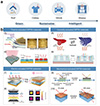 |
Figure 1 Schematic of some typical DRTM materials and their application fields. (a) Potential application fields of DRTM materials. (b) Several typical DRTM materials classified according to different stimuli conditions [3–10]. |
Thermo-actuated DRTM materials. According to different weather conditions and user demands, these materials can achieve dynamic optical modulation by thermally induced phase transitions. Vanadium dioxide (VO2) is one of the most representative thermo-actuated DRTM materials that transforms from low-loss dielectric state to metallic state when above phase transition temperature. Wang et al. [3] demonstrated a VO2/spacer/low-E stacking Fabry-Perot resonator by spin coating, which could dynamically modulate longwave IR emissivity at different temperature conditions with luminous transparency. Benchmarked against commercial low-emissivity glass, this thermo-actuated smart window could achieve enhanced energy savings of up to 324.6 MJ/m2. Tang et al. [4] developed a flexible coating based on WxV1−xO2 (x = 1.5%). It could modulate sky-window emissivity from 0.20 to 0.90 when the surface temperature exceeded ~22 °C, which was an extremely practical threshold that was not previously available. This coating yielded an annual energy saving of 2.64 GJ through implementation on a 118 m2 roof in a single-family home in Baltimore, Maryland. Although thermo-actuated DRTM materials require no external energy input or control circuits and are straightforward to implement, their transition thresholds are inherently dictated by the material itself, resulting in limited modulation flexibility.
Humidity-actuated DRTM materials. Applied in the field of personal thermal management (PTM), these materials could reduce reliance on building energy consumption, thereby lowering carbon emissions. They achieve thermal regulation mainly by modulating IR emissivity according to different levels of humidity on skin surface. Zhang et al. [5] pioneered the use of humidity-actuated DRTM materials in textiles by incorporating triacetate-cellulose bimorph fibers with carbon nanotubes, which could achieve more than 35% IR radiation modulation in response to skin humidity changes. This dynamic IR gating effect originated from distance-dependent electromagnetic coupling between adjacent coated fibers within yarns, which could achieve self-adaptive PTM. Li et al. [6] engineered multimodal humidity-responsive flaps with a metalized-nylon heterostructure, that could broaden the thermal comfort zone by 30.7% and 20.7% beyond conventional static textiles and single-modal adaptive wearables without any energy input. Humidity-actuated DRTM materials typically exhibit good biocompatibility and relatively simple architectures, but they often suffer from limited operational bandwidth and cycling stability.
Electro-actuated DRTM materials. Generally, these materials modulate sunlight reflection/absorption and IR emissivity through redox reactions or alterations of intrinsic properties under an applied voltage. Typical approaches include using inorganic compounds (e.g., WO3), conductive polymers (e.g., PEDOT), and metal electrodeposition techniques. Sui et al. [7] achieved a broad dynamic modulation of IR emissivity from 0.07 to 0.92 along with exceptional cycling stability over 2500 cycles by using reversible copper electrodeposition technique on a conductive graphene electrode. Building energy simulations indicated that this design, when deployed as building envelopes, could reduce annual HVAC (heating, ventilation, and air conditioning) energy use by an average of up to 43.1 MBtu across the United States. Shao et al. [8] designed an energy-saving window based on a WO3/VO2 film structure, which could provide three different modes to satisfy diverse weather conditions. Energy savings for this material, validated by field tests and simulations, substantially exceeded those of commercial low-emissivity glass in most climate zones, peaking at 596.7 MJ/m2. Electro-actuated DRTM materials typically offer fast response-time and precise modulation, but they also present drawbacks such as the need for a continuous energy supply and high system complexity.
Mechanical-actuated DRTM materials. These materials can reversibly tune their optical properties by altering internal microstructure in response to externally applied mechanical forces. The whole systems are often fabricated by integrating active materials (e.g., graphene, metallic film, and MXene) within elastic substrates like polydimethylsiloxane (PDMS) or styrene-ethylene-butylene-styrene (SEBS). Inspired by cephalopod skin, Gorodetsky et al. [9] developed a dynamically tunable IR-reflecting platform by patterning wrinkles onto the material’s active region. This system featured various advantages, such as tunable spectral range, weak angular dependence, and long cycling stability, which provide much inspiration for subsequent researches. After that, they also developed a composite material with tunability of IR optical properties by changing the area size that copper film covered polymer substrate under a uniaxial strain [10]. Featuring an adaptive thermal comfort window of approximately 8 °C, this composite could yield building energy savings exceeding 30% when integrated into widely deployed advanced garments. Mechanical-actuated DRTM materials are usually structurally simple; however, they often exhibit slow response speeds and poor durability.
Despite tremendous progress, the field of DRTM materials is still in the early stage of development for practical applications. Challenges still exist and further advances are required to develop this promising field. First, multiband compatibility and independent regulation are required for further optimization. For example, the pronounced seasonal temperature differences in Central Plains region impose demanding requirements for coordinated regulation in IR and solar spectra. Future systems may call for a spatially layered design strategy with multi-material integration. Graphene-based materials, which are capable of dynamic modulation in the mid-IR spectrum, could be used at the top layer, and electrochromic materials like WO3 could be used as bottom layer for solar band regulation. Meanwhile, artificial intelligence may be integrated for real-time meteorological data analysis that further leads to autonomously switching between different modes. Second, large-area fabrication remains a critical challenge. Developing continuous, high-throughput, and large-scale manufacturing techniques such as roll-to-roll processing is essential to reduce costs and facilitate commercialization. Third, materials’ durability needs improvement. Metallic nanolayers are prone to oxidation, and some polymers may degrade under ultraviolet (UV) exposure, which will lead to optical performance decay. Material design must therefore be optimized to withstand environmental factors such as UV radiation, high temperature, humidity, oxidation, and contaminants. Fourth, energy supply issues must be addressed. Certain actuation methods (e.g., electrical and mechanical driving) require external power inputs, which not only restrict application scenarios but may also compromise overall energy-saving performance. Integrating DRTM materials with renewable energy systems (e.g., photovoltaics) or self-powered units (e.g., triboelectric nanogenerators) may offer a sustainable solution. Finally, the synergistic effect between radiation and other thermal management methods, such as conduction and convection, is also a factor that needs to considered. For instance, designing radiation-convection coupled surfaces, like porous microstructures, can simultaneously enhance IR radiation dissipation and leverage natural or induced airflow for secondary cooling. Alternatively, integrating highly conductive phase-change materials will accelerate heat extraction from the source. Such integrated thermal management strategies address transient high heat fluxes and extreme environments, offering on-demand, adaptive cooling solutions for high-power electronics and spacecraft with variable thermal protection, thereby achieving a leap in energy efficiency.
In conclusion, the rapid development of DRTM materials holds immense promise for real-world applications at various scales. Thus, they are promise to contribute to sustainable development in the future. For example, in the field of architecture, DRTM materials applied to facades, roofs, or windows can reduce energy consumption for heating and cooling. For personal thermal management, such materials integrated as smart wearable textiles can enhance thermal comfort across varying external environments and reduce the corresponding energy demand. For aerospace applications, they can provide effective thermal control and contribute to safety protection. In the field of energy and optoelectronics, DRTM materials are able to facilitate the integration of thermal management with energy storage, supporting goals of energy self-sufficiency and recycling.
Funding
This work was supported by the National Natural Science Foundation of China (52172120) and the Shanghai Science and Technology Development Funds (24CL2900500).
Author contributions
H.Z. and J.Z. proposed the topic of the perspective. J.Z. wrote the manuscript, and designed the figure. W.X. and J.Z. discussed the manuscript. H.H., D.Z. and H.Z. revised the manuscript. All authors have given approval to the final version of the manuscript.
Conflict of interest
The authors declare no conflict of interest.
References
- Li S, Yang E, Li Y, et al. Self-adaptive energy-efficient windows with enhanced synergistic regulation of broadband infrared thermal radiation. Nano Energy 2024; 129: 110023. [Article] [Google Scholar]
- Tu H, Wang T, Chen M, et al. Isotope-driven hydrogel smart windows for self-adaptive thermoregulation. Nat Commun 2025; 16: 6952. [Article] [Google Scholar]
- Wang S, Jiang T, Meng Y, et al. Scalable thermochromic smart windows with passive radiative cooling regulation. Science 2021; 374: 1501-1504. [Article] [NASA ADS] [CrossRef] [PubMed] [Google Scholar]
- Tang K, Dong K, Li J, et al. Temperature-adaptive radiative coating for all-season household thermal regulation. Science 2021; 374: 1504-1509. [Article] [CrossRef] [PubMed] [Google Scholar]
- Zhang XA, Yu S, Xu B, et al. Dynamic gating of infrared radiation in a textile. Science 2019; 363: 619-623. [Article] [Google Scholar]
- Li X, Ma B, Dai J, et al. Metalized polyamide heterostructure as a moisture-responsive actuator for multimodal adaptive personal heat management. Sci Adv 2021; 7: eabj7906. [Article] [Google Scholar]
- Sui C, Pu J, Chen TH, et al. Dynamic electrochromism for all-season radiative thermoregulation. Nat Sustain 2023; 6: 428-437. [Article] [Google Scholar]
- Shao Z, Huang A, Cao C, et al. Tri-band electrochromic smart window for energy savings in buildings. Nat Sustain 2024; 7: 796-803. [Article] [Google Scholar]
- Xu C, Stiubianu GT, Gorodetsky AA. Adaptive infrared-reflecting systems inspired by cephalopods. Science 2018; 359: 1495-1500. [Article] [Google Scholar]
- Leung EM, Colorado Escobar M, Stiubianu GT, et al. A dynamic thermoregulatory material inspired by squid skin. Nat Commun 2019; 10: 1947. [Article] [Google Scholar]
© The Author(s) 2025. Published by Science Press and EDP Sciences.
 This is an Open Access article distributed under the terms of the Creative Commons Attribution License (https://creativecommons.org/licenses/by/4.0), which permits unrestricted use, distribution, and reproduction in any medium, provided the original work is properly cited.
All Figures
|
Figure 1 Schematic of some typical DRTM materials and their application fields. (a) Potential application fields of DRTM materials. (b) Several typical DRTM materials classified according to different stimuli conditions [3–10]. |
| In the text | |
Current usage metrics show cumulative count of Article Views (full-text article views including HTML views, PDF and ePub downloads, according to the available data) and Abstracts Views on Vision4Press platform.
Data correspond to usage on the plateform after 2015. The current usage metrics is available 48-96 hours after online publication and is updated daily on week days.
Initial download of the metrics may take a while.