


| Issue |
Natl Sci Open
Volume 4, Number 6, 2025
Special Topic: Intelligent Materials and Devices
|
|
|---|---|---|
| Article Number | 20250061 | |
| Number of page(s) | 4 | |
| Section | Materials Science | |
| DOI | https://doi.org/10.1360/nso/20250061 | |
| Published online | 16 October 2025 | |
PERSPECTIVE
Artificial intelligence reforges intelligent fibers
1
School of Materials Design & Engineering, Beijing Institute of Fashion Technology, Beijing 100029, China
2
Academy for Advanced Interdisciplinary Studies, Peking University, Beijing 100871, China
3
School of Materials Science and Engineering, Peking University, Beijing 100871, China
4
Beijing Graphene Institute (BGI), Beijing 100095, China
* Corresponding author (email: This email address is being protected from spambots. You need JavaScript enabled to view it.
)
Received:
28
September
2025
Revised:
13
October
2025
Accepted:
13
October
2025
Intelligent fibers serve as versatile functional interfaces facilitating bidirectional human-environment interaction and constitute foundational elements for next-generation wearable computing/human interaction systems. These intelligent fibers and wearables exhibit multifunctional capabilities, including perception or response to external stimuli, energy harvesting/storage, microclimate regulation, information transmission, and expansive multifunctionality [1–3]. The design of intelligent fibers entails complex multiscale parameter coupling, spanning from nanoscale building block features to macrostructure optimized for wearable applications. The intricate multiscale composition-structure-property relationship, sensitive dependence of the fabrication parameters and unpredictable performance optimization in varied application scenarios, exceed the management and decoupling capability of conventional data systems, computational resources, and modeling approaches. Artificial intelligence (AI) provides essential methodologies for addressing these multi-scenario and cross-scale complexities, enabling a compelling synergy. For instance, intelligent fiber could serve as AI-driven terminals for signal acquisition and processing, while conversely, AI-empowered algorithm and modeling could accelerate the cross-scale structural design of intelligent fibers. This dual role necessitates a paradigm shift toward AI for Science (AI4S) frameworks in fiber materials research [4], driving concerted efforts to integrate AI throughout the material design and discovery pipeline. Figure 1 illustrates this hierarchical paradigm, showing the possibility of integrating AI across scales from nano building blocks to macroscale applications, and through the workflow from expedient data acquisition to feedback performance optimization.
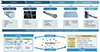 |
Figure 1 Multiscale coupling and workflow of AI empowered intelligent fiber design. |
AI-empowered data acquisition and enrichment. A high-quality, large-scale data set is a prerequisite for training a powerful AI model for material design. The idea of integrating high-throughput experimental agents, natural language processing, large language models in descriptor mapping and real-time experiments, as well as multiscale numerical coupling, demonstrated the potential of AI-empowered robotics for material discovery [5]. For instance, Huang et al. [6] introduced an inspiring chemical AI-copilot robotic explorer. The modular platform combines natural language processing, synthetic literature mining and human conversational experiment executional units based on a large language model (LLM). A plenty of compounds, including coordination complexes, metal-organic frameworks (MOFs), metallic nanoparticles and polyoxometalates, can be automatically synthesized and characterized. As a result, an unreported Mn-W polyoxometalate cluster was discovered by the generative platform, expanding the inorganic chemical space with AI integration. The synthesized MOFs and metallic nanoparticles provide possibilities for the future development of flexible electrodes and intelligent fibers for electromagnetic attenuation and thermal management. Multiscale modeling integrates atom-level density functional theory (DFT), ab-initio molecular dynamics (AIMD), molecular dynamics (MD), and macro-level finite element analysis (FEA) to investigate and predict the atomic, electrochemical and mechanical properties of the intelligent materials. These verified simulation results can also be employed as training sets to accelerate the material creations.
Descriptor identification. Identifying the correct descriptors for critical data labeling is necessary before conducting self-driven data screening, noise reduction, and subsequent modeling [7]. Take the wet-spun carbon nanotube (CNT) fiber [8] as an example, the dual diffusion process in the coagulation bath involves kinetics and thermodynamics that controls the morphology, porosity and mechanical properties of the product. A descriptor pool containing massive information can be collected throughout the spinning dope preparation, filament coagulation, post-treatment and performance characterization processes. These highly integrated spectroscopic, imaging and digital datasets contain critical descriptors governing nano-building block solubility and distribution, bidirectional diffusion dynamics within the coagulation bath, and orientation and crystallization of CNT fibers by inheriting the excellent intrinsic properties of CNT. To eliminate invalid data interference, systematic screening and denoising are prerequisites for AI treatment, while functional parameters require normalization into structured formats compatible with model recognition, followed by correlation and labeling according to their influence on fiber performance. Parameters such as coagulation bath non-solvent concentration, temperature, dope phase concentration, solubility in targeted solvents, diffusion time based on the classic Fick’s Law of diffusion and experimental findings help to verify the effectiveness of the remaining descriptors propelling the performance enhancement of CNT fiber-based applications, such as batteries, sensors and thermal management devices. Through automated data analysis, AI-enabled digital twin technology subsequently deciphers complex microstructural-property relationships and guides physical-field optimization.
Active study and feedback. Data + Knowledge-driven machine learning is a significant trend in material discovery [9]. The ultimate goal of constructing the data set is to support the self-optimized and continuously evolving AI-driven material design closed-loop. Machine learning (ML) filters high-value experimental points through active learning. When developing temperature-controlled coatings, Bayesian optimization dynamically adjusts the priority of parameters such as the phase transition temperature of microcapsules, reduces 80% of the experimental amount, and quickly converges to the optimal formula [10]. However, active learning and Bayesian optimization rely on the fundamentals of small-sample data and probability prediction, which makes them applicable under conditions. For emerging multifunctional and novel intelligent fibers, there is a lack of existing training data to conduct reliable modelling. Aiming at the scarcity of extreme scene data, the model is fine-tuned with a small amount of data to improve the prediction reliability by using physical constraint transfer learning. Discriminative models build a “structure-performance” mapping to predict key parameters like thermal conductivity. Generative models reverse design the microstructure and have a feedback closed-loop for optimizing the specific thermal management requirements. For example, rewarded by the difference between target and background radiation, the design of infrared stealth material dynamically adjusts the driving voltage to adapt to environmental changes [10]. In multiscale modeling, ML integrates data to build a cross-level model, feedback correction parameters, and ensure the performance of materials under multi-field coupling.
Intelligent fiber is the ideal interface for future embodied intelligence, which is an important carrier for AI to perceive, adapt and transform the physical world. Future intelligent fiber design is a comprehensive hybrid of the cutting-edge technologies, enhanced computing power and storage medium, revolutionary algorithms and information processing networks. Advanced AI enables the customization of the fiber microstructure, process parameter optimization, predictive enhancement, and multi-functionality integration. Deep learning could facilitate noise suppression and feature extraction from multi-source sensing signals, while high-performance computing empowers a real-time response system to improve anti-interference ability and decision-making accuracy in complex environments. Despite the transformative potential of AI4S, there are concerns about algorithmic trustworthiness, epistemological gaps in multiscale fiber structure modeling. Currently, most AI models for material design resemble black-box systems, which are unmanageable to troubleshoot when the actual performance deviates from the prediction. It is also the case for the multiscale modeling of intelligent fibers when explaining the physical mechanism of cross-scale performance regulation. Combine physical laws with data-driven models to constrain the scale-bridging model output within physically reasonable ranges, highlighting the contribution weight of critical descriptors to performance, which will contribute to reducing the probability of unphysical predictions. Strategic implementation of FAIR (findable, accessible, interoperable, reusable) principles, coupled with standardized data curation protocols, will promote the reliability of applying AI in intelligent fiber development for mission-critical intelligent applications.
Funding
This work was supported by the National Key Research and Development Program of China (2022YFA1203302, 2022YFA1203304), the National Natural Science Foundation of China (52472039, T2188101), the Joint Research Project of the Shijiazhuang-Peking University Cooperation Program, and the Beijing Municipal Education Commission under the Beijing Higher Education Young Elite Teacher Project (BPHR202203063).
Author contributions
Y.S. supervised the project. S.M. and Y.S. wrote the manuscript. M.S. edited the figure, J.Y., J.J., M.X. and S.Y. discussed and revised the manuscript. All authors reviewed and edited the manuscript.
Conflict of interest
The authors declare no conflict of interest.
References
- Dang C, Wang Z, Hughes-Riley T, et al. Fibres—threads of intelligence—enable a new generation of wearable systems. Chem Soc Rev 2024; 53: 8790-8846. [Article] [Google Scholar]
- Chen C, Feng J, Li J, et al. Functional fiber materials to smart fiber devices. Chem Rev 2023; 123: 613-662. [Article] [Google Scholar]
- Zhu S, Huang Y, Fang B. Progress and prospect for conducting polymer fibers. Adv Mater 2025; : e04071. [Article] [Google Scholar]
- Jiang X, Xue D, Bai Y, et al. AI4Materials: Transforming the landscape of materials science and enigneering. Rev Mater Res 2025; 1: 100010. [Article] [Google Scholar]
- Jiang X, Wang W, Tian S, et al. Applications of natural language processing and large language models in materials discovery. npj Comput Mater 2025; 11: 79. [Article] [Google Scholar]
- Huang L, Zhang C, Fu Y, et al. Natural-language-interfaced robotic synthesis for AI-copilot-assisted exploration of inorganic materials. J Am Chem Soc 2025; 147: 23014-23025. [Article] [Google Scholar]
- Ge W, De Silva R, Fan Y, et al. Machine learning in polymer research. Adv Mater 2025; 37: 2413695. [Article] [Google Scholar]
- Yang Z, Yang Y, Huang Y, et al. Wet-spinning of carbon nanotube fibers: Dispersion, processing and properties. Natl Sci Rev 2024; 11: nwae203. [Article] [Google Scholar]
- Jiang X, Fu H, Bai Y, et al. Interpretable machine learning applications: A promising prospect of AI for materials. Adv Funct Mater 2025; 35: 2507734. [Article] [Google Scholar]
- Zhang H, He Q, Zhang F, et al. Biomimetic intelligent thermal management materials: From nature-inspired design to machine-learning-driven discovery. Adv Mater 2025; 37: 2503140. [Article] [Google Scholar]
© The Author(s) 2025. Published by Science Press and EDP Sciences.
 This is an Open Access article distributed under the terms of the Creative Commons Attribution License (https://creativecommons.org/licenses/by/4.0), which permits unrestricted use, distribution, and reproduction in any medium, provided the original work is properly cited.
All Figures
|
Figure 1 Multiscale coupling and workflow of AI empowered intelligent fiber design. |
| In the text | |
Current usage metrics show cumulative count of Article Views (full-text article views including HTML views, PDF and ePub downloads, according to the available data) and Abstracts Views on Vision4Press platform.
Data correspond to usage on the plateform after 2015. The current usage metrics is available 48-96 hours after online publication and is updated daily on week days.
Initial download of the metrics may take a while.