


| Issue |
Natl Sci Open
Volume 5, Number 2, 2026
|
|
|---|---|---|
| Article Number | 20250081 | |
| Number of page(s) | 4 | |
| Section | Materials Science | |
| DOI | https://doi.org/10.1360/nso/20250081 | |
| Published online | 15 December 2025 | |
COMMENTARY
Rethinking passive cooling in a warming world
College of Materials Science and Engineering, National Engineering Research Center for Advanced Polymer Processing Technology, Zhengzhou University, Zhengzhou 450002, China
* Corresponding authors (emails: This email address is being protected from spambots. You need JavaScript enabled to view it.
(Yamin Pan); This email address is being protected from spambots. You need JavaScript enabled to view it.
(Changyu Shen))
Received:
3
December
2025
Revised:
11
December
2025
Accepted:
12
December
2025
As global temperatures rise and extreme heat events become increasingly frequent, the energy required to keep indoor spaces comfortable is surging [1]. Building cooling alone accounts for roughly 15% of the world’s primary energy consumption, driving substantial greenhouse gas emissions [2]. Conventional mechanical cooling systems—though effective—come with high energy and carbon costs. This urgent context has propelled the search for sustainable, low-energy cooling strategies [3].
Passive daytime radiative cooling (PDRC) has emerged as one of the most promising solutions. By reflecting incoming solar radiation and emitting mid-infrared (MIR) thermal radiation through the atmospheric window (8–13 μm), PDRC materials can cool surfaces below ambient temperature without external energy input [4]. Yet, despite remarkable advances in optical engineering, most PDRC materials deliver cooling powers below 150 W m−2—insufficient for many real-world needs, especially under strong solar irradiance [5]. Moreover, the practically attainable cooling performance is often further reduced by weather-dependent factors such as atmospheric humidity, cloud coverage, aerosol loading, and environmental thermal disturbances, which collectively suppress the effective radiative window and introduce additional non-radiative heat gains.
Hu et al.’s study [6], recently published in Advanced Materials, broke this long-standing performance barrier. By integrating radiative cooling with phase-change thermal regulation in a bioinspired hierarchical composite, the authors report a record cooling power of 226 W m−2 and an average subambient temperature reduction of 10.1 °C. Their nacre-pearl-inspired architecture represents a conceptual leap forward in the design of hybrid passive cooling systems.
The fundamental challenge in developing high-performance radiative-phase change hybrid cooling (RPHC) materials lies in reconciling competing functional requirements [7,8]. On one hand, strong solar reflectivity and MIR emissivity demand a porous structure and high refractive index contrast [9]. On the other hand, efficient phase-change heat storage requires high loading of phase change materials (PCMs), which often possess low reflectivity and tend to compromise porosity. Integrating PCMs can also introduce leakage, reduce structural stability, or create thermal barriers that limit heat transfer [10].
Previous RPHC designs typically combined separate radiative and PCM layers, but the weak interfacial thermal coupling limited performance. Homogeneous composites, in contrast, improved thermal contact but often suffered from optical degradation. As a result, the highest reported cooling power of homogeneous RPHC systems prior to this work was < 90 W m−2, with latent heats below 100 J g−1—far from the theoretical potential.
Hu and colleagues turned to nature for inspiration. The iridescent luster of nacre, or mother-of-pearl, arises from its intricate multilayer structure and strong light scattering between layers of aragonite and biopolymer. Similarly, when pearls are embedded within nacre, the composite exhibits enhanced back-scattering and brightness due to synergistic refractive contrasts (Figure 1a). Translating this principle into thermal optics, the authors hypothesized that embedding core-shell phase change capsules (PCCs) into a multilayered cellulose matrix could yield a hierarchical structure with superior light scattering, thermal storage, and mechanical integrity.
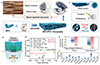 |
Figure 1 RPHC cooling design and its performance for building cooling energy saving. (a) Design of bioinspired hierarchical RPHC composites. (b) Fabrication illustration of MFC/PCC with water pre-removal freeze-drying. (c) Working mechanism of RPHC composites. (d) Comparison of MFC/PCC and conventional PDRC materials. (e) The subambient cooling performances of MFC/PCC-60 in Wuhan (China) and Sipsongpanna (China). (f) Total cooling energy savings percentage per year among all 12 cities. Adapted with permission from Ref. [6]. Copyright 2025, Wiley-VCH. |
To realize this design, they employed a water pre-removal strategy, controlling the degree of filtration (20–90 wt.%) before freeze-drying to tune porosity and morphology (Figure 1b). The resulting microfibrillated cellulose (MFC)-PCC composite achieves an optimal configuration at 60% water removal (MFC/PCC-60), exhibiting a nacre-like multilamellar matrix decorated with well-dispersed spherical PCCs—akin to “pearls” in a layered host (Figure 1c).
The optical results are remarkable: the optimized structure achieves solar reflectivity of 0.969 and MIR emissivity of 0.958, while maintaining a latent heat of 132.1 J g−1 at a PCC loading of 70 wt.%. The pore size distribution, centered at 174 nm, aligns closely with the solar spectrum, maximizing back-scattering and minimizing absorption. Crucially, the hierarchical design prevents PCM leakage and ensures efficient thermal conduction through continuous cellulose pathways.
The MFC/PCC composite delivers a record-high cooling power density of 226 W m−2, breaking the practical performance barrier of traditional radiative coolers (Figure 1d). Field tests under full sunlight in Wuhan and Sipsongpanna, China, confirm its exceptional cooling capability. In Sipsongpanna, under solar irradiance peaking at ≈700 W m−2, a structure equipped with the MFC/PCC-60 composite as roof and wall maintained an interior temperature consistently below the ambient, with an average subambient cooling of 11.3 °C (Figure 1e).
This enhancement originates from the synergistic coupling between radiative and latent heat mechanisms. During peak solar input, the PCM phase transition absorbs excess thermal energy, delaying temperature rise and stabilizing performance. As solar intensity wanes, the stored heat is released gradually, preventing overcooling and maintaining thermal equilibrium. The reversible nature of this process provides an adaptive thermal buffering capability, mimicking the way biological systems regulate temperature under dynamic environments.
Furthermore, the composite demonstrated excellent mechanical flexibility and cycling stability, retaining over 95% of its latent heat capacity after 200 thermal cycles—attributes essential for practical integration into building envelopes and flexible devices.
To assess real-world significance, Hu et al. [6] simulated building energy performance by applying the MFC/PCC-60 composite to roofs and walls of a two-floor mall across 104 Chinese cities. The results reveal an average annual cooling energy reduction of 4.4%, with greater benefits in tropical and subtropical regions such as Hainan and Yunnan, where energy savings exceed 45 MJ m−2 (Figure 1f). When extrapolated globally, the adoption of such composites could reduce annual CO2 emissions by 1.22 billion tons, equivalent to 3.3% of total emissions in 2023—a substantial contribution to carbon neutrality targets.
Hu et al.’s work exemplified how bioinspired structural design can overcome the fundamental trade-offs in multifunctional materials. By bridging optical physics and thermal storage science, they establish a powerful new paradigm for sustainable cooling and thermal management. The record-breaking cooling power of their RPHC composite not only sets a new benchmark for PDRC performance but also highlights the transformative potential of hierarchical, nature-inspired architectures in addressing global energy and climate challenges.
As passive cooling technologies move toward practical deployment, the integration of such hybrid systems could redefine how we engineer materials for thermal comfort—achieving efficiency not through mechanical power, but through structure, light, and nature’s quiet ingenuity.
Funding
This work was supported by the National Natural Science Foundation of China (52573101) and the Natural Science Foundation of Henan (242300421010).
Conflict of interest
The authors declare no conflict of interest.
References
- Yang K, Wu X, Zhou L, et al. Towards practical applications of radiative cooling. Nat Rev Clean Technol 2025; 1: 235-254. [Article] [Google Scholar]
- Zhu Y, Luo H, Yang C, et al. Color-preserving passive radiative cooling for an actively temperature-regulated enclosure. Light Sci Appl 2022; 11: 122. [Article] [Google Scholar]
- Lin K, Chen S, Zeng Y, et al. Hierarchically structured passive radiative cooling ceramic with high solar reflectivity. Science 2023; 382: 691-697. [Article] [CrossRef] [PubMed] [Google Scholar]
- Raman AP, Anoma MA, Zhu L, et al. Passive radiative cooling below ambient air temperature under direct sunlight. Nature 2014; 515: 540-544. [Article] [CrossRef] [PubMed] [Google Scholar]
- Fan S, Li W. Photonics and thermodynamics concepts in radiative cooling. Nat Photon 2022; 16: 182-190. [Article] [NASA ADS] [CrossRef] [Google Scholar]
- Hu X, Quan B, Shi Z, et al. Bioinspired hierarchical radiative-phase change hybrid cooling composite with record-breaking cooling power. Adv Mater 2025; : e10988. [Article] [Google Scholar]
- Yang M, Zhong H, Li T, et al. Phase change material enhanced radiative cooler for temperature-adaptive thermal regulation. ACS Nano 2023; 17: 1693-1700. [Article] [CrossRef] [Google Scholar]
- Wang S, Wu M, Han H, et al. Regulating cold energy from the universe by bifunctional phase change materials for sustainable cooling. Adv Energy Mater 2024; 14: 2402667. [Article] [Google Scholar]
- Liu X, Zhang W, Zhang X, et al. Transparent ultrahigh-molecular-weight polyethylene/MXene films with efficient UV-absorption for thermal management. Nat Commun 2024; 15: 3076. [Article] [Google Scholar]
- Liu X, Zhang H, Pan Y, et al. A transparent polymer-composite film for window energy conservation. Nano-Micro Lett 2025; 17: 151. [Article] [Google Scholar]
© The Author(s) 2025. Published by Science Press and EDP Sciences.
 This is an Open Access article distributed under the terms of the Creative Commons Attribution License (https://creativecommons.org/licenses/by/4.0), which permits unrestricted use, distribution, and reproduction in any medium, provided the original work is properly cited.
All Figures
|
Figure 1 RPHC cooling design and its performance for building cooling energy saving. (a) Design of bioinspired hierarchical RPHC composites. (b) Fabrication illustration of MFC/PCC with water pre-removal freeze-drying. (c) Working mechanism of RPHC composites. (d) Comparison of MFC/PCC and conventional PDRC materials. (e) The subambient cooling performances of MFC/PCC-60 in Wuhan (China) and Sipsongpanna (China). (f) Total cooling energy savings percentage per year among all 12 cities. Adapted with permission from Ref. [6]. Copyright 2025, Wiley-VCH. |
| In the text | |
Current usage metrics show cumulative count of Article Views (full-text article views including HTML views, PDF and ePub downloads, according to the available data) and Abstracts Views on Vision4Press platform.
Data correspond to usage on the plateform after 2015. The current usage metrics is available 48-96 hours after online publication and is updated daily on week days.
Initial download of the metrics may take a while.